
House Flipping vs. Buy-and-Hold: Which Strategy is Right for You in 2026?
Can't decide between a quick profit and long-term wealth? Our 2026 guide breaks down house flipping vs. buy-and-hold real estate strategies. Discover which path aligns with your risk tolerance, goals, and expertise in the evolving market.
Howard Hubbard
2 min read
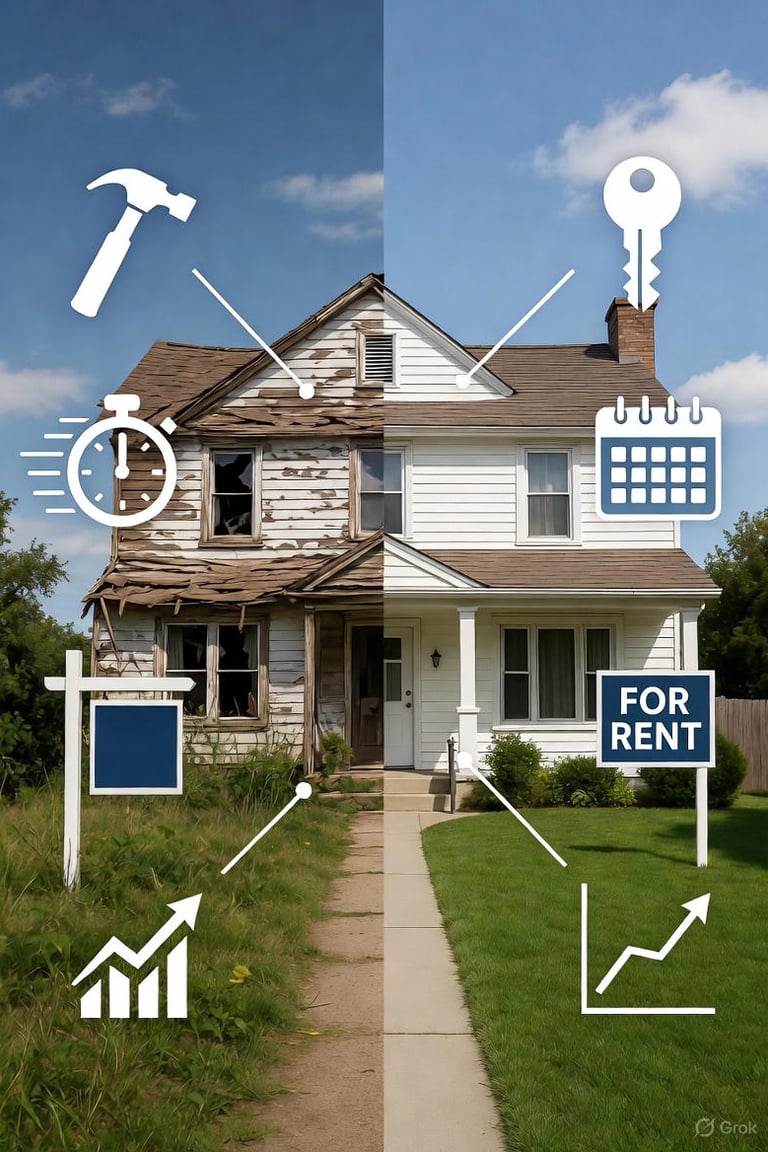
Understanding House Flipping and Buy-and-Hold Strategies
Investing in real estate offers various avenues, prominently including house flipping and buy-and-hold strategies. Each of these approaches caters to different investor profiles and objectives. House flipping involves purchasing properties with the intent to renovate and sell them quickly for a profit. In contrast, the buy-and-hold strategy focuses on acquiring rental properties to generate passive income over time.
Assessing the Potential of House Flipping
House flipping can be highly profitable in a hot real estate market, where properties appreciate rapidly and buyer demand is strong. The key to success in flipping homes is selecting the right property, secure financing, and executing cost-effective renovations. In 2026, investors might find beneficial opportunities in emerging neighborhoods undergoing gentrification, as these areas often present undervalued houses just waiting to be transformed.
However, house flipping comes with significant risks. Market downturns, unexpected renovation costs, and lengthy selling periods can erode profit margins. Furthermore, the need for swift decisions and a keen understanding of market trends requires specific expertise, making this strategy more suitable for seasoned investors or those working with experienced teams.
Exploring the Buy-and-Hold Approach
The buy-and-hold strategy appeals to investors seeking more stability and reduced risk exposure. By purchasing properties to rent out, investors can earn continuous cash flow while benefiting from property appreciation over the long term. This method is less dependent on market fluctuations, making it a safer choice for those who prefer a long-term investment horizon.
In 2026, those considering a buy-and-hold strategy should factor in demographic trends, economic developments, and rental demand in specific regions. Properties in areas with growing populations often provide significant returns, especially as housing demand increases while inventory remains limited. Additionally, buy-and-hold investors can take advantage of tax benefits, such as deductions for mortgage interest and property taxes.
Choosing the Right Strategy for You
Deciding between house flipping and the buy-and-hold strategy in 2026 ultimately boils down to your financial goals, risk tolerance, and investment expertise. If you are willing to engage in active management and have the skills to execute renovations quickly, flipping may yield high returns. Conversely, if you prefer a more passive approach with steady income and lower risks, consider the buy-and-hold strategy.
Ultimately, it is essential to conduct thorough research, evaluate market conditions, and perhaps even consult with real estate professionals to ascertain which investment strategy aligns best with your financial aspirations. Whether you choose to flip houses or invest in rental properties, each strategy possesses its merits, and understanding these can significantly influence your success in the real estate market.
Connect
info@noeldrakeproperties.com
Stay Updated with Us
682-312-4533